Why Fast Site Cleanup Matters After Tree Felling in Cape Town
After a big tree comes down, the work is far from over. The trunk may be sectioned, the branches cut, but what remains on the ground can be overwhelming. In Cape Town, where properties often sit on uneven terrain, close to power lines, or right next to a neighbour's wall, the mess gets complicated fast. A professional tree felling job includes a stage that many homeowners overlook: fast site cleanup. Getting the property back to a usable, safe state quickly is not just a convenience - it is a necessary part of the whole operation.
Why cleanup speed matters
Leaving felled timber and green waste lying around creates several problems. First, it blocks access to parts of the garden or driveway. Second, it attracts pests. Third, it can be a trip hazard, especially if children or pets use the area. In Cape Town's windy summer months, loose branches and debris can also become projectiles. A fast site cleanup removes these risks promptly. It also prevents the cut wood from staining paving or grass, which happens when sap and moisture sit on surfaces for days.
Speed is also a practical matter when you need the area for other uses. Maybe you want to start landscaping right away, or you need vehicle access. The longer the debris sits, the longer you wait to move forward with your plans. That is why a reliable arborist or tree felling crew makes cleanup a priority, not an afterthought.
What is involved in a proper cleanup
A thorough cleanup goes far beyond raking leaves. It involves several pieces of equipment and a methodical approach. The wood chipper is central to the process. It turns branches and smaller limbs into mulch, which reduces the volume of green waste dramatically. The mulch itself can be used on the property for garden beds, or it can be hauled away. The crew also uses chainsaws to cut larger logs into manageable lengths, and a stump grinder to deal with what remains at ground level.
After the big pieces are gone, the focus shifts to debris hauling. This means gathering all the small twigs, leaves, and sawdust that scatter during the cutting and chipping. A leaf blower and rake are standard tools here. Finally, there is site restoration - smoothing out the area, filling any holes left by the stump grinder, and checking that no hidden hazards remain. The whole process is a coordinated effort that depends on good planning and the right equipment.
The role of the stump grinder
Tree stump removal is one of the most important parts of the post-felling process. A stump that is left behind is not just an eyesore. It can become a trip hazard, it can regrow shoots, and it can attract wood-boring insects. A stump grinder can chew through the stump and its major roots to a depth of several inches below grade. The resulting wood chips and soil mix can then be used to fill the hole, leaving a level surface. This step is essential for safety and for the appearance of the property.
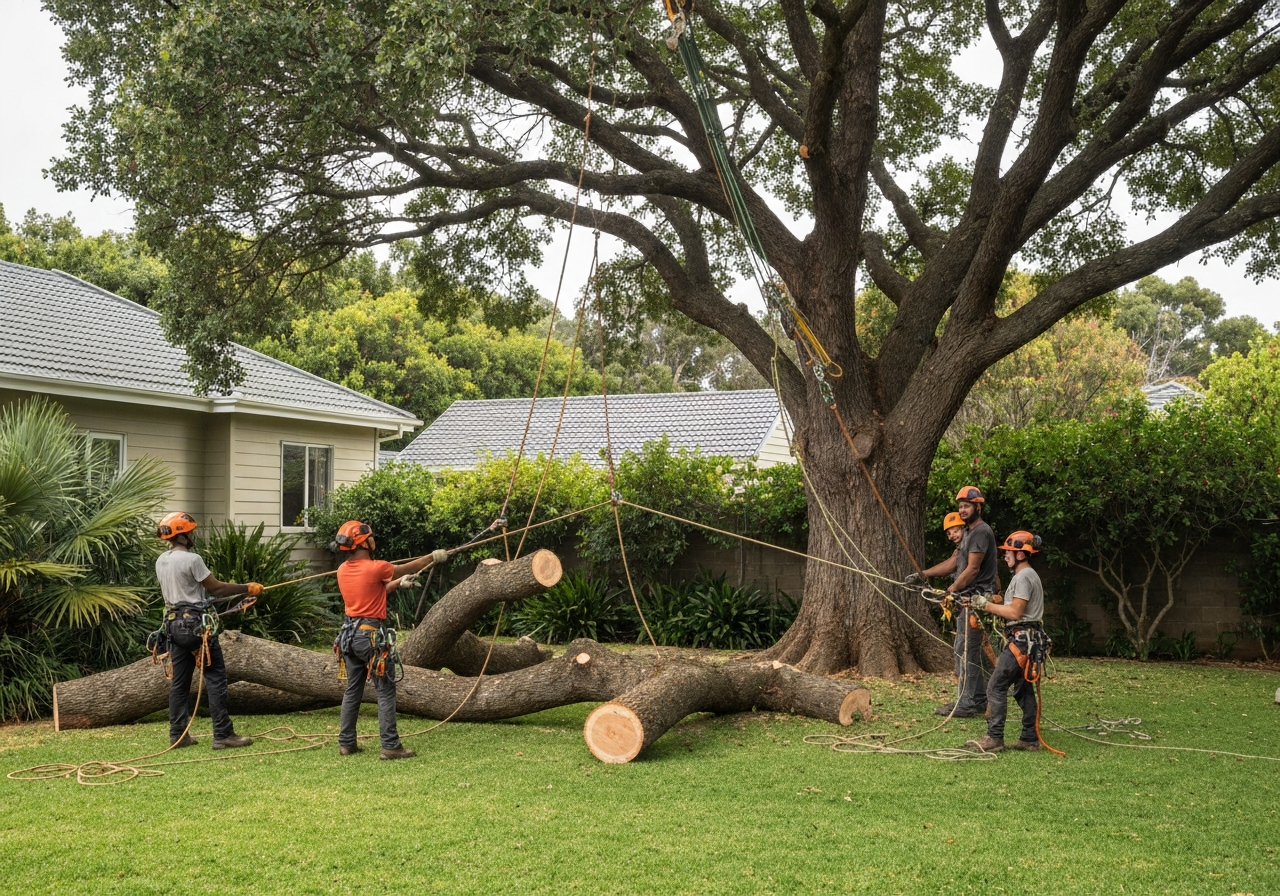
Grinding a stump takes skill. The operator must know the stump's size, the species identification, and the location of underground utilities. Tree diameter and root spread vary widely between species. A large oak stump requires a different approach than a small wattle. The grinder itself is a powerful machine, and the operator must wear proper safety gear, including hearing protection, eye protection, and steel-toed boots. The noise and vibration are significant, so the job is done quickly but carefully.
How fast site cleanup protects your property
When a tree is felled near a house, a wall, or a fence, the risk of property damage is real. Even with careful rigging, branches can scrape paint, dent gutters, or break tiles. A fast site cleanup means that any damage is spotted immediately. The crew can document it and, if necessary, the insurance claim can be started right away. Delaying cleanup can hide damage until it is too late to address.
Another risk is from the wood itself. Freshly cut logs and branches contain moisture that can stain concrete, paving stones, and wooden decks. The longer they sit, the harder the stain is to remove. A prompt cleanup prevents these marks from setting in. It also prevents the growth of mold or mildew in the damp Cape Town winter, when rain can soak into the debris pile and create a breeding ground for unwanted organisms.
The difference between a quick tidy and a proper restoration
Some tree felling services offer a "cleanup" that is really just a rough gathering of the biggest pieces. They might leave behind small branches, sawdust, and scattered leaves. A professional operation, on the other hand, treats the site as they found it - or better. This includes raking the area, removing all green waste, and making sure the ground is level where the stump was removed. If the client wants the mulch left behind, it is spread evenly. If they want it removed, it goes onto the truck.
Site restoration can also include reseeding or laying new turf if the grinder left a bare patch. It is not always necessary, but it is an option that responsible crews offer. A good arborist will ask the client about their plans for the area and tailor the cleanup accordingly. For example, if the client plans to plant a new tree or install a garden bed, the crew might leave the ground roughed up for better planting. If the area is for lawn, they will smooth it out and add topsoil.
Equipment that makes cleanup efficient
Beyond the wood chipper and stump grinder, the crew relies on several hand tools. The branch lopper is used to cut smaller branches into pieces that fit easily into the chipper. Chainsaws of different sizes handle the larger sections. A good set of rakes, shovels, and wheelbarrows is essential for gathering and moving debris. The truck or trailer that hauls everything away must be covered to prevent spillage on the road.
Safety gear is non-negotiable. Every crew member wears hard hats, gloves, and high-visibility clothing. Hearing protection is worn near the chipper and grinder. Eye protection is necessary when using the chainsaw or lopper, as wood chips and sawdust fly everywhere. The crew also uses communication signals to coordinate the movement of heavy logs and the operation of machinery. This is not just for their safety - it also ensures that the cleanup is done without accidents that could delay the job or cause injury.
Getting a quote that includes fast site cleanup
When you contact a tree felling service, the quote should clearly state what is included in the cleanup. Some companies list it as a separate line item. Others bundle it into the total price. The key is to ask: does the price cover full debris hauling, stump grinding, and site restoration? Or is it just the felling? A professional company will provide a detailed quote that includes species identification and tree diameter assessment, because these factors affect the time and equipment needed for the cleanup.
Do not be shy about asking for a site visit. A good quote is based on seeing the tree and its surroundings. The arborist will check for power lines, assess the slope, and look at the access for trucks and machinery. They will also note any obstacles like walls, pools, or delicate plants. This information helps them estimate the time needed for the cleanup and the type of equipment required. A phone quote or an email quote is rarely accurate for a complex removal.
Once you have the quote, ask about the timeline. How soon after the felling will the cleanup happen? Will it be the same day? For most residential jobs, the cleanup should start immediately after the tree is down. A delay of even a day can create problems, especially if the weather turns. A reputable company will schedule the cleanup as part of the same visit, so you are not left with a mess for days.
Why Cape Town homeowners value fast site cleanup
Cape Town properties often have limited space. The garden is an extension of the living area, and a pile of debris makes it unusable. Whether you are planning a braai with friends or just want your kids to play safely outside, a clean yard matters. The fast site cleanup that professional tree felling services provide is not a luxury - it is a necessity for maintaining the value and enjoyment of your home.
Moreover, Cape Town has strict regulations about green waste disposal. You cannot just dump branches and leaves on the curb without following municipal guidelines. A professional crew handles all the green waste properly, either by chipping it into mulch or by taking it to a licensed disposal site. This saves you the hassle of multiple trips to the dump and the risk of fines.
Another point is the fire risk. In the dry summer months, a pile of dead branches and leaves can become a fire hazard, especially in areas close to the mountain or in suburbs with dense vegetation. Removing the debris promptly reduces this risk significantly. It also prevents the wood from becoming a home for snakes, rodents, or insects, which are common concerns in the Cape Town region.
Final thoughts
A tree felling job is not complete until the site is safe, clean, and ready for its next use. The speed of that cleanup matters for safety, for appearance, and for your peace of mind. When you hire a professional crew, you are paying for the skill of the arborist, the power of the chainsaw and wood chipper, and the thoroughness of the debris hauling and site restoration. Fast site cleanup is the final step that ties the whole project together, and it is one that you should expect from any reputable service in Cape Town.